











Euchre overview
A tradition of skill and strategy
Welcome! Euchre is one of the most-loved card games in the world thanks to its simple rules, cooperative play, and deep collection of skills and strategies necessary to become a champion player. Most popular throughout Canada and the American Midwest, Euchre has fans all around the world. Played in teams, it challenges your memory, timing, and tactical thinking to win the most crucial tricks.
Now, thanks to the Euchreonline.com platform, those players can match and compete with Euchre aficionados across the map. You’re sure to find your next game while you’re here, and be sure to look at tournaments and missions and all the other ways you can raise and expand your game.
There’s always a new challenge waiting for you every time you log on. Now deal those cards!
Euchre variants
Like many card games, Euchre has variants that allow for different rules and different numbers of players.
Several two-player variants exist, each with varying levels of difficulty. In one version, players receive a three-card dummy hand in addition to their normal hand. Players then can swap in some or all of the cards in the dummy hand to improve the cards they’ll play.In the three-player version, players can work together or competitively, which happens a lot when someone is about to win.
Buck Euchre is played between three or four players. There are no partners, and the bidding process changes from the usual Euchre rules. In Buck Euchre, each player begins with 15 points, and every trick taken deducts a point as players race to Zero!
How to play Euchre
Introduction
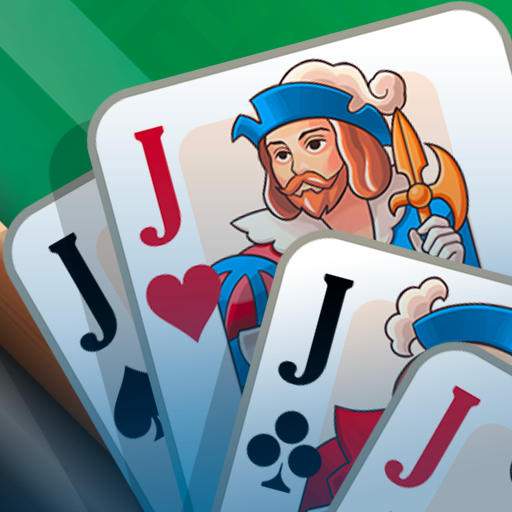
Euchre can seem very confusing at first thanks to its shifting trump suits, strange deck, and unusual ranking of cards. (The Jack of trump is the strongest card? Followed by the Jack of the same color? Who’s idea was that?).
Quickly, though, players find the rhythm that makes Euchre such a popular game. Once you’ve completed a few hands, the rules will be second nature to you, and a lifetime of Euchre games awaits!
Card Distribution and Scoring
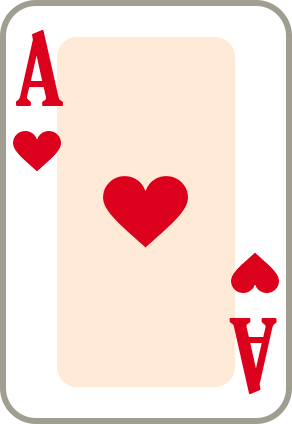
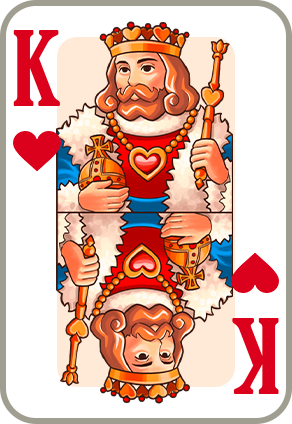
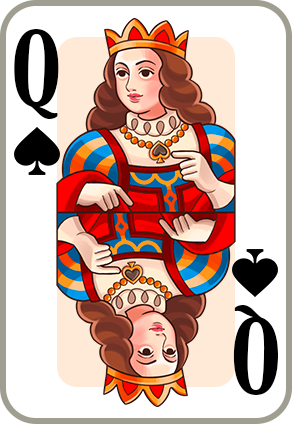
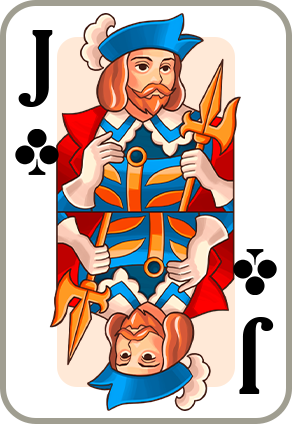
The deck used in Euchre is unlike any used in other card games. Euchre uses only the Aces, Kings, Queens, Jacks, Tens, and Nines of each suit.
Players receive five cards per hand, usually dealt three-at-a-time then two-at-a-time (house rules sometimes differ on this). The remaining cards are set aside and the top card turned face-up. This is the “Up Card” and is the first possible trump suit.
If the team that called the hand’s trump suit wins three or four of the five available tricks in the hand, the team receives a point. In most scoring schemes, a calling team that wins all five tricks of a hand receives two points. If a player opts to call trump and “Go Alone,” meaning playing without the benefit of their partner, they receive one point for winning three or four tricks, but four points if they win all five.
If the defending, non-declaring team wins three or more tricks in a hand, they have “Euchred” their opponents and receive four points.
Most games are played up to a total of ten points.
Turn Structure
Once the cards are dealt and the Up Card shown, the player to the left of the dealer can tell the dealer to “Pick it up.” The Up Card’s suit is trump for that hand, and the dealer places the Up Card in their hand and returns another card face down to replace the Up Card.
If the player to the left of the dealer doesn’t want to declare trump, they can “pass.” The next player to the left can then tell the dealer to pick it up or they can pass. If all four players prefer to pass, the dealer turns the Up Card face down. The player to their left can then declare a different suit as trump or once again choose to pass.
If all the players decide to pass, the final decision falls on the dealer. Depending on your house rules, the dealer can pass, killing the hand and passing the cards to the player on their left for the next deal. Or, in some cases, the dealer is compelled to declare trump, placing their team in jeopardy of being Euchred.
The player seated to the left of the dealer lays the first card. Play proceeds clockwise.
Players are compelled to follow the suit of the first card played. If they can’t, they can lay a trump card or “throw off” by playing a card from the other two suits.
The trick is won by the highest ranked card of the first-played suit, or the highest ranked card from the trump suit. One of Euchre’s idiosyncrasies, however, is that the Jack of trump (called the right bower) is the highest card, and the Jack of the same color as trump (called the left bower) is the second-highest card.
Winning the Game
The best way to learn Euchre is to play. That helps you get the feel of the unusual card-ranking system Euchre uses.
With experience, players will grow to learn when it’s best to pass or declare trump. It’s also important that players learn to anticipate how their partner will—or won’t—contribute to the hand.
One of the best aspects of Euchre is that the hands and the games move quickly, so it doesn’t take a lot of time to get several games under your belt.
History of Euchre
Origin of Euchre
The earliest written rules for Euchre date to 1844, but a similar game that many experts trace to Euchre’s origins is mentioned as early as 1810. Many theories exist as to how and why Euchre became so popular in the United States, in particular in the Midwest. Most historians today believe immigrants from Europe brought the game with them as they made their way to urban centers for work.
Many words associated with Euchre, like “bower,” appear to have linguistic connections to German. It’s likely that German-speaking players were some of the earliest Euchre players in the United States.
Euchre popularity
Euchre is not as popular as gambling games like Poker and Blackjack, or as popular as simpler trick-taking games like Spades. Euchre fans tend to be devoted and die-hard, however. The social element of Euchre and the teamwork involved in playing successfully have cemented the game’s presence in club settings and regularly-scheduled basement games.
Euchre remains popular in the American Midwest and Great Lakes region. Students arriving at the University of Michigan from other states often find that one of their first informal lessons is how to play Euchre. Not surprisingly, then, given their geographic proximity, many Canadians enjoy Euchre today, too.
Glossary of Terms
Trump
The highest-ranked suit in a hand as determined by the bidding phase. Trumping a trick refers to playing a trump card after the Lead is played.
Bowers
The highest-ranking cards in the game. The Right Bower is the Jack of the trump suit and the Left Bower is the Jack of the same-color suit as trump. (For example, if Clubs are trump, the Jack of Clubs is the Right Bower and highest-ranked card for that hand, followed by the Jack of Spades, which for that hand is the Left Bower.
Trick
One complete sequence of each player laying a card. The highest-ranking card wins the trick.
Lead
The first card played in a trick. It determines the suit that other players are compelled to play, if they can.
Following Suit
Playing a card of the same suit as the lead card where possible.
Euchre
When the declaring team fails to win three or more tricks. When the team fails to win three or more tricks, they have been Euchred.
Set
Another term for getting Euchred. As in “We got set.”
Loner
A bid where a player chooses to play without their partner in the hopes of winning all five tricks and receiving extra points.
Going Alone
The act of playing a loner hand. Many players have catchphrases to indicate they’re Going Alone (for example, telling their partner to “Put ‘em down”).
Pass
Choosing not to declare trump on your turn in the bidding phase.
“Pick It Up”
An indication to the dealer to pick up the Up Card to declare the trump suit for the hand. This is also called “Ordering Up.”
Up Card
The card among the remaining undealt cards left face-up after the deal. The Up Card can be accepted as trump or declined through passing.
Misdeal
A mistake in dealing, like giving an incorrect number of cards to players. Depending on your house rules, this can result in a loss of the deal. Whatever rules you follow, it’s always annoying.
Stick the Dealer
A common house rule, the dealer must call trump if everyone else passes. (Some card clubs use a ruder word than “Stick.”)
Ace-No-Face
A particularly unlucky hand. It contains an Ace and no face cards. Some game groups let the player swap out this hand for the kittie cards.
Popular games
Best card games in the United States
Many card games are popular in the United States by virtue of tradition geographic preferences. Of course, gambling plays an important role in determining what card games Americans play. Games that lend themselves to a casino environment are likely to be played across the country.
Poker online
Widely-played and wildly popular in casions in many of its variations, including Texas Hold’em, Omaha, and Seven-Card Stud. Poker even enjoys popularity as Reality TV. Its role in the United States’ Wild West has given Poker an air of romance that’s often featured in Western movies.
Spades online
Another trick-taking game, often played in partnerships, where players must predict the number of tricks they will win. Spades is extremely popular across the American South, but players can be found throughout the country. Spades are trump. Always.
Pinochle online
A game that involves melding and trick-taking, traditionally played with a special 48-card deck that repeats its cards to create larger-than-average hands. Pinochle has a unique scoring system that makes it a challenge that the best Pinochle players crave. Add in the social element of playing in teams, and it’s easy to see why, though Pinochle doesn’t match the popularity of Poker or Rummy, the game always has its fans.
Bridge online
A highly strategic partnership-based trick-taking game, popular in competitive and casual settings. Bridge is famously popular among older Americans because it encourages good social connections and improved cognition. Some clubs are dedicated to attracting the next generation of Bridge players.
Rummy 500 online
Rummy 500 Online brings one of America’s most iconic card games to the digital world. In this game, players alternately draw cards and form scoring combinations while strategically managing their hand to avoid having too many cards when an opponent goes out.
Crazy Eights online
A sleep-over game! Crazy Eights is a simple game similar to Uno. Players match cards by rank or suit while trying to be the first to discard all their cards. In that way it has a lot in common with Rummy. American youngsters often learn Crazy Eights as they reach their pre-teen years.
Classic rummy online
A classic game where players form sets and runs of cards, with variations like Gin Rummy and Indian Rummy. Rummy is popular across the United States thanks to its simple rules that lend themselves to variations and house rules. Rummy is as common around a campfire as it is around semi-professional tournaments.
Hearts online
A trick-taking game where players try to avoid certain high-point cards while passing unwanted cards to opponents. Hearts has many subtle strategies that veteran players can master. When you play Hearts, remember: if you can’t win them all, then don’t win any!
Blackjack online
Another game popular at casinos, Blackjack is also known as "21," because players try to beat the dealer without exceeding 21 points. Blackjack is a rare game where the players are not competing against each other. That means everyone can go home happy!
We hope you enjoyed this most popular card games listing. Don't hesitate to keep digging and find the perfect game for you. All these games need differents mindsets to understand and master them.